

Wild Spaces Series
for Orchestra
2222 / 4331 / timp. 2 perc / strings
This series comes out of my Master's research on contemporary music composers engaging with themes of environmental sustainability and climate action through their artistic output. With the natural world increasingly impacted by human choices, it is imperative for people to pause and reflect on their personal impact, as well as the repercussions of the organizations and governments they support. The Wild Spaces Series is my contribution to a long lineage of composers creating music to reflect the world and issues around them, with the hope that it generates a sense of individual reflection on the threats facing the natural world around us, and through that reflection, stirs action towards a more sustainable future.
15% of all rental and royalty fees from any performances of works from the Wild Spaces Series is donated to environmental sustainability efforts through the Canadian Parks and Wilderness Society and the Haida Stewardship Fund.

ATHABASCA
Duration: ca. 9:00
Previous Performances: Toronto Symphony Orchestra (Explore the Score Program), Litha Symphony (New York, USA)
Program Notes: Athabasca is inspired by my love for Jasper National Park. Growing up in Alberta, I made countless trips from Edmonton to Jasper, and each time, there was something awe-inspiring and magical about driving into the park. The prairies melt into hills, which subsequently burst into mountains, and your guide along this incredible journey is the Athabasca River. It seems to stretch endlessly as it twists and turns with the forested mountains; in some areas, sprawling and seemingly slow-moving, while other areas spring to life with rapids and waterfalls.
Land Acknowledgement: The first composition in this series is inspired by the Upper Athabasca River, as it runs near the town of Jasper. Being born and raised in Edmonton, the natural areas surrounding Jasper Park were one of the first wild spaces I fell in love with, and it continues to hold special meaning to me. The area of Jasper National Park that inspired this composition is on Treaty 6 and 8 Territories, as well as The Jasper House Métis District. This land is the Traditional Territory, meeting ground, gathering place, travelling route and home for the Dane-zaa, Aseniwuche Winewak, As’in’î’wa’chî Ni’yaw, Nêhiyawak, Anishinaabe, Secwépemc, Stoney Nakoda, Mountain Métis and Métis.
MIRRORS IN HAIDA GWAII
Duration: ca. 9:00
Previous Performances: Sofia Philharmonic Orchestra (Sofia, Bulgaria)
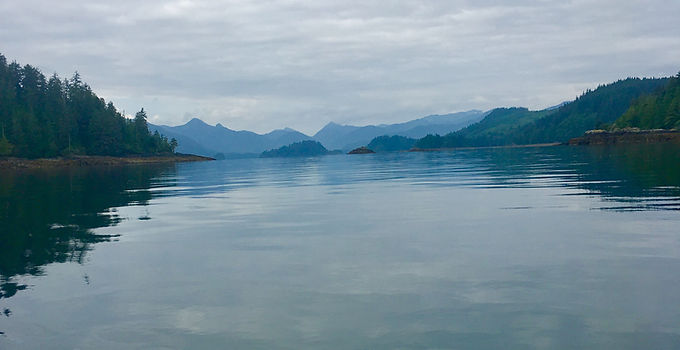
Program Notes: The inspiration for Mirrors in Haida Gwaii came from a trip I took with two of my siblings to the remote island of Haida Gwaii in 2017. This archipelago lies eight hours off the coast of Vancouver Island in Northern British Columbia, Canada. The scenery and landscapes I experienced on that trip were something I never thought I’d see in Canada – it truly felt otherworldly. Lush green trees and sprawling mountains with a foggy grey atmosphere that gave the impression of an early morning in a rainforest. The entire island is incredible, but the most specific memory I have comes from a morning kayaking trip across Alliford Bay, just outside of Daajing Giids. Most days, when I looked out beyond the coasts of Haida Gwaii, I was met with a fierce and endless ocean, but, on this particular morning, I was lucky enough to experience the ocean as clear and calm as glass.
Land Acknowledgement: The second piece reflects on a trip to Haida Gwaii, the territory of the Haida Nation, where I found myself kayaking in G̱aats’iiG̱undaay Alliford Bay, just outside of Daajing Giids. The Haida Nation has stewarded the lands and waters of Haida Gwaii since time immemorial. In 2024, with the signing of the Chiixuujin | Chaaw Kaawgaa "Big Tide (Low Water)" Haida Title Lands Agreement, Canada recognized and affirmed that the Haida Nation has Aboriginal title to Haida Gwaii protected under section 35 of the Constitution Act, 1982.

SLEEPING GIANT
Duration: ca. 9:00
Previous Performances: Edmonton Symphony Orchestra, Orchestra Toronto
Program Notes: Sleeping Giant is based on the stunningly beautiful and grand Sleeping Giant Provincial Park, as well as an homage to Great Lake parks all across Ontario. Although I grew up in Alberta, in 2020 I decided to pack up everything I had in my car and drive all the way across Canada to move to Toronto. After three days of driving across the prairies, I finally hit Ontario, and one of the first stops I made was in Thunder Bay. I can distinctly remember, without knowing what it was at the time, the shape of the Sleeping Giant peninsula stretching across the gigantic, ocean-esque lake. That was my first exposure to Lake Superior, and since then, time and time again, the majesty and grandeur of the Great Lakes have surprised and delighted me.
Land Acknowledgement: The Sleeping Giant, Nanabijou, is within the boundaries of lands covered under the Robinson-Superior 1850 Treaty. This is the traditional land of the Anishnawbe people and is where they and many other peoples have gathered for time immemorial. The Fort William First Nation (Reserve #52) is located adjacent to the City of Thunder Bay, and the Sleeping Giant Provincial Park is part of the traditional use area of the Fort William First Nation.

GROS MORNE
Duration: ca. 11:00
Program Notes: The fourth piece in this series is based on the soaring fjords and moody mountains of Gros Morne National Park in Newfoundland, a landscape that garnered the title of a UNESCO World Heritage Site in 1987 due to its exceptional natural beauty and outstanding examples of major stages in the Earth’s geological evolution, illustrated by geological formations protected within the park. I had the privilege of visiting Gros Morne National Park in 2023 on my first visit to Newfoundland, and the ecological beauty of this park and the entire island of Newfoundland had a lasting effect on me. There is a myriad of inspiring ecological phenomena in Gros Morne, but the three referenced in this piece are the Tablelands, where you can walk on the barren, orange landscape of Earth’s mantle visible through 400 million years of mountain erosion; fertile volcanic coasts, filled with sea stacks, coves, and beaches; and Western Brook Pond, a grandiose, glacier-fed fjord lake with 600m steep rock walls and waterfalls.
Land Acknowledgement: The fourth piece takes its name from Gros Morne National Park in Newfoundland, and is inspired by the world-renowned ecological wonders of the area. This area has been home to Indigenous peoples, such as the Maritime Archaic, Groswater Palaeo-Eskimo, and later the Mi’kmaq, as well as the Beothuk, whose culture has been lost forever and can never be recovered. The province of Newfoundland and Labrador is the ancestral homeland of many diverse populations of Indigenous people who have contributed to 9,000 years of history. Today, this province is home to diverse populations of Indigenous and other people, each with diverse histories and cultures, including the Mi’kmaq, Innu, and Inuit.

LAMENT (for Shrinking Wild Spaces)
Duration: ca. 6:00
Amplified Nature Sound Tracks: Lament has the same instrumentation as the other works, however, in the percussion part, there are recorded nature sounds that are to be played through amplified speakers. To help make this as accessible and easy as possible, I have created a single track that plays all the recorded nature sounds mixed together. An onstage percussionist can play this off a phone or a laptop with a headphone adapter running into a speaker placed onstage or an auditorium's speaker system. Alternatively, if the hall has a speaker system and a dedicated sound booth, the track could be triggered from the back.
Program Notes: My initial plan when I set out with this project was to finish the Wild Spaces Series with Gros Morne; I thought it was fitting that the series went from coast to coast, and that the series was entirely focused on celebrating the magnificence and beauty of Canadian landscapes. However, as I conducted deeper and deeper research into the state of climate change and the predicted effects it will have on the ecological systems I care for, I decided to include a companion piece that is more reflective of these issues, and what I believe can be done in the face of them. A lament lends itself to expressing sadness, oftentimes over loss or death, and this piece conveys the sadness I feel about the reality that, due to climate change, many of the ecological landscapes that I love and appreciate will be impacted and changed. Current intergovernmental climate science indicates a high potential for widespread adverse impacts and related environmental loss. The Wild Spaces Series is dedicated to spaces that have positively impacted my life and continue to positively impact the lives of many Canadians, but without action, there will be a future where these places no longer exist as they currently do. This is a lament for the fact that wild spaces, within Canada and globally, are shrinking due to human expansion; this is a lament for future generations who will not get to experience the profound beauty of these environments in the same way I did.
Land Acknowledgement: Lament (for Shrinking Wild Spaces) speaks not to a particular place, but to the cumulative issues facing these environments, and others like them across Canada. I want to acknowledge that my voice of lament for this change is an echo of the call for environmental action initiated by Indigenous communities across Canada; their voices have been vital in championing the importance of the natural world and the fragility of our human connection to it. Additionally, I acknowledge that the effects of climate change are often felt first, and most severely, by Indigenous populations in Canada, as articulated by the Indigenous Climate Hub.

Fundraising Organizations
15% of all rental and royalty fees from any performances of works from the Wild Spaces Series is donated to environmental sustainability efforts.
Various environmental organizations and charities were considered for fundraising partnerships, but the final selections were, in part, chosen because the organization is either Indigenous-led or includes a clear focus on Indigenous communities within their environmental actions.
Canadian Parks and Wilderness Society (CPAWS)
Funds from performances of Athabasca, Sleeping Giant, Gros Morne and Lament will go towards the Canadian Parks and Wilderness Society.
CPAWS is Canada’s only charity dedicated to the protection of public land, freshwater and ocean with a strong national and regional presence across the country. They are Canada’s leader in conservation with 60 years of success based on their expertise, public education and advocacy, relationships and local knowledge. They are a credible, trusted, knowledge-based, nationally coordinated, collaborative organization, focused on conserving nature to respond to the dual crises of accelerated biodiversity loss and climate change. CPAWS advocates for the effective, long-term protection of ecologically- and culturally-significant land, freshwater and ocean areas in Canada. Working in a way that respects the sovereignty and leadership of Indigenous nations, they achieve our mission through knowledge-based advocacy, and public education and engagement, underpinned by collaboration and partnership.
Council of the Haida Nation (CHN) Marine Stewardship
Funds from performances of Mirrors in Haida Gwaii will go towards the Haida Gwaii Marine Stewardship department.
The Marine Stewardship Department is responsible for the stewardship and protection of the marine environments surrounding Haida Gwaii. As part of the Council of the Haida Nation (CHN), the department plans, implements and evaluates programs that uphold Haida sovereignty over the waters of the Haida Gwaii. It includes the Marine Planning, Marine Mapping and Fisheries Departments, which work collaboratively to safeguard marine resources, promote sustainable practices, and ensure that Haida values are central to marine governance and decision making.